
Research

Research at eCAL

Across the world, mobility and energy networks are diversifying and merging. Electrified transportation creates new mobility options while imposing new energy demands and storage opportunities. Making these interconnected systems efficient requires strong fundamental science for modeling, estimation, and control, grounded in real applications.

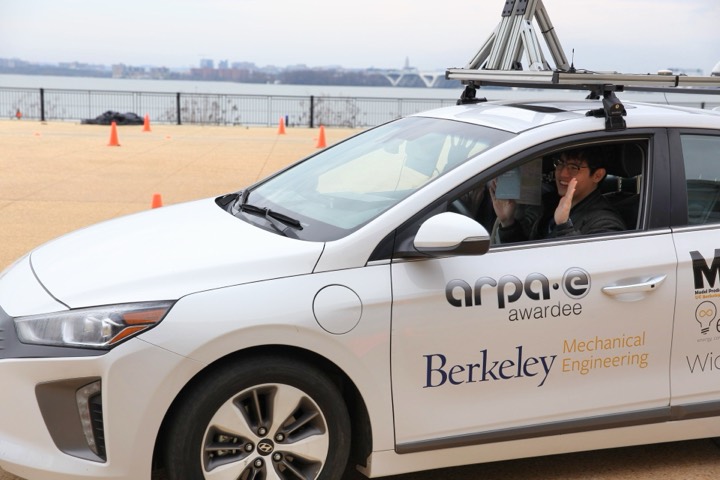
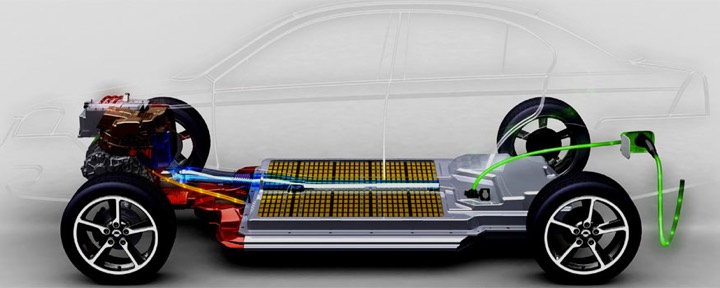
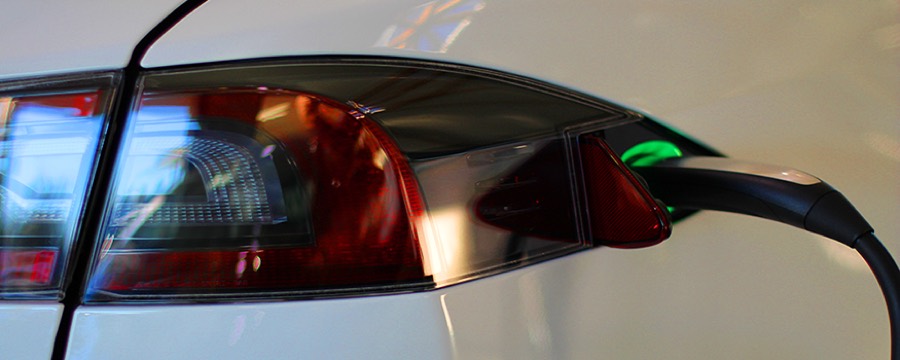
An electric vehicle connected to a fast-charging cable

Representative papers

  1. Defining an accuracy limit in battery state estimation — S. Jiang et al., Joule, 2026
  2. On Electrochemical Model-Based State Estimation for Lithium–Sulfur Batteries — Z. Huang et al., IEEE Transactions on Control Systems Technology, 2024
  3. A Deep Reinforcement Learning Framework for Fast Charging of Li-Ion Batteries — S. Park et al., IEEE Transactions on Transportation Electrification, 2022
  4. Battery State Estimation for a Single Particle Model with Electrolyte Dynamics — S. J. Moura et al., IEEE Transactions on Control Systems Technology, 2017
  5. Optimal Charging of Li-Ion Batteries via a Single Particle Model with Electrolyte and Thermal Dynamics — H. E. Perez et al., Journal of The Electrochemical Society, 2017

All 121 papers in this theme

01 · Research theme

Battery modeling and algorithms

How much more capacity, speed, and life can software unlock from the batteries we already have?

Today's electric vehicle batteries are expensive and prone to unexpected failure. Conventional methods for preventing premature aging rely on heavy over-design and leave much of the available capacity unused.

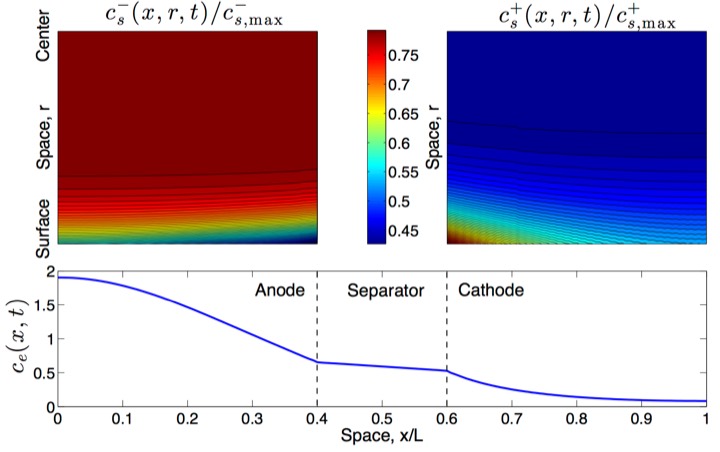
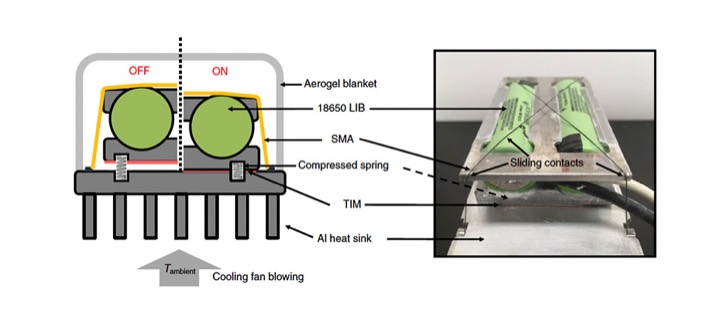
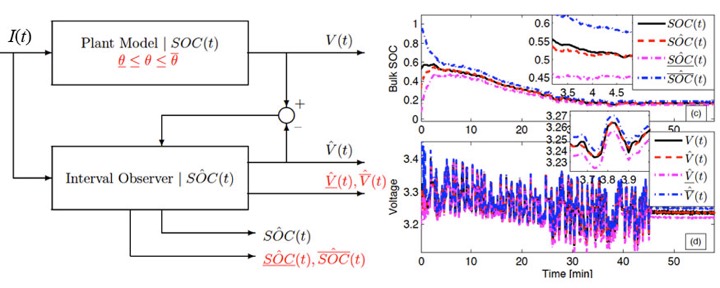
We develop battery monitoring and control software that estimates internal electrochemical states in real time, predicts how charge and discharge cycles affect health, and computes charging protocols that are both fast and gentle. Our work spans model reduction (single-particle models with electrolyte and thermal dynamics), parameter identification and optimal experiment design, PDE observers, reference governors, and reinforcement learning for fast charging.

Current directions

  • Electrochemical model reduction and parameter identification
  • State and health estimation with PDE observers
  • Health-aware fast charging and reference governors
  • Thermal management and fault diagnostics
  • Learning-based battery control
Collaborators: Robert Bosch Research and Technology Center; Prof. Miroslav Krstić, UC San Diego; Samsung; LG Chem
Support: DOE ARPA-E AMPED; National Science Foundation (incl. CAREER); Samsung Global Research Outreach

02 · Research theme

Automated, connected, and electrified vehicles

How should fleets of electric and automated vehicles be designed, charged, and driven when they share roads and the grid?

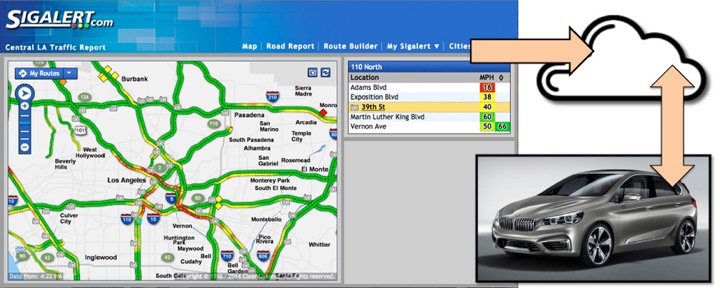
Our research focuses on reducing vehicle energy consumption through advanced automation and connectivity technologies. We develop algorithms that leverage real-time traffic data, vehicle-to-vehicle communication, and predictive control to optimize vehicle operation.

This includes eco-driving strategies that anticipate traffic conditions, intelligent speed adaptation, and coordinated platooning of connected vehicles. By combining automation with connectivity, we achieve significant improvements in energy efficiency while maintaining or enhancing mobility performance. Our work spans from theoretical algorithm development to practical implementation and testing on real vehicles.

Current directions

  • Eco-driving and ecological adaptive cruise control
  • Predictive energy management with traffic data
  • Connected-vehicle coordination and platooning
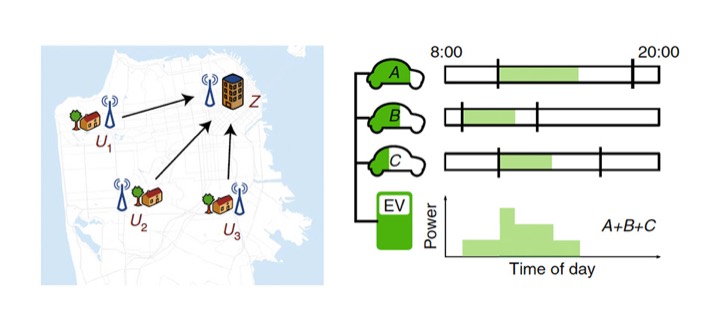
  • Electrified fleets: routing, charging, and battery swapping
  • On-road experiments with test vehicles

Collaborators: Lawrence Berkeley National Laboratory; Prof. Francesco Borrelli, UC Berkeley; Hyundai Motor Company; Tsinghua-Berkeley Shenzhen Institute
Support: LBNL LDRD; France Berkeley Fund; Siebel Energy Institute; California Energy Commission

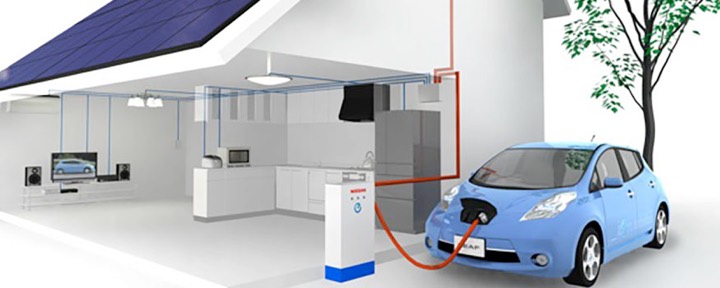
Illustration of a home with solar panels, battery storage, and an electric vehicle

Representative papers

  1. Sustainable plug-in electric vehicle integration into power systems — H. Zhang et al., Nature Reviews Electrical Engineering, 2024
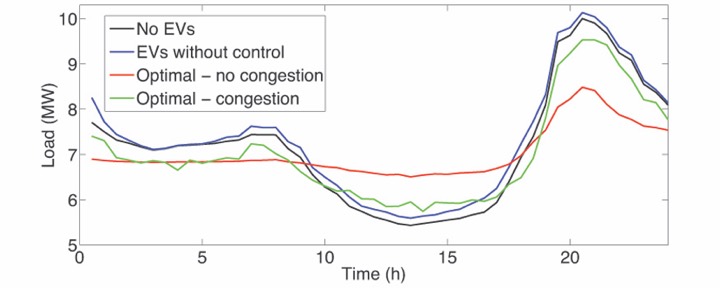
  2. Optimal Charging of Electric Vehicles for Load Shaping: a Dual Splitting Framework with Explicit Convergence Bounds — C. Le Floch et al., IEEE Transactions on Transportation Electrification, 2016
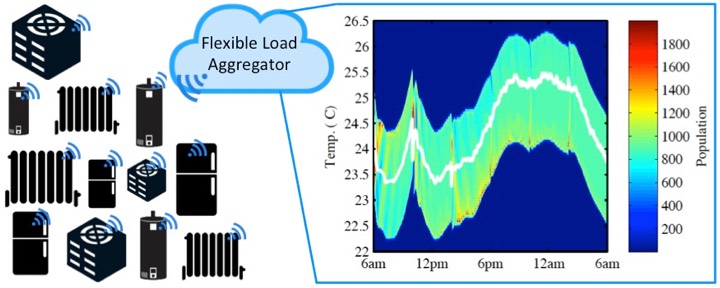
  3. Modeling, Control, and Stability Analysis of Heterogeneous Thermostatically Controlled Load Populations Using Partial Differential Equations — A. Ghaffari et al., Journal of Dynamic Systems, Measurement, and Control, 2015
  4. Plug-and-Play Model Predictive Control for Load Shaping and Voltage Control in Smart Grids — C. Le Floch et al., IEEE Transactions on Smart Grid, 2019
  5. Data-driven Chance-constrained Regulation Capacity Offering for Distributed Energy Resources — H. Zhang et al., IEEE Transactions on Smart Grid, 2019

All 69 papers in this theme

03 · Research theme

Power and transportation infrastructure

How do we build power grids and charging networks that support the transition to electric mobility?

Our research explores the intersection of electric power and transportation systems, with a focus on vehicle electrification. We develop algorithms and frameworks for operating power grids with high penetration of electric vehicles, considering both their energy demands and potential grid services.

This includes optimizing charging infrastructure placement, managing grid constraints during mass charging events, and leveraging vehicle-to-grid capabilities for grid stability. Our work combines power systems engineering with transportation planning to create resilient and efficient infrastructure that supports the transition to electric mobility.

Current directions

  • Charging infrastructure siting, sizing, and operation
  • Grid constraints and mass-charging events
  • Vehicle-to-grid services and flexible loads
  • Electricity markets and energy storage
  • Resilient, equitable infrastructure planning

Collaborators: Prof. Jae Wan Park, UC Davis; NEC Laboratories America; Aalborg University; Lawrence Berkeley National Laboratory
Support: California Energy Commission EISG; CITRIS Seed Funding; Siebel Energy Institute; TotalEnergies

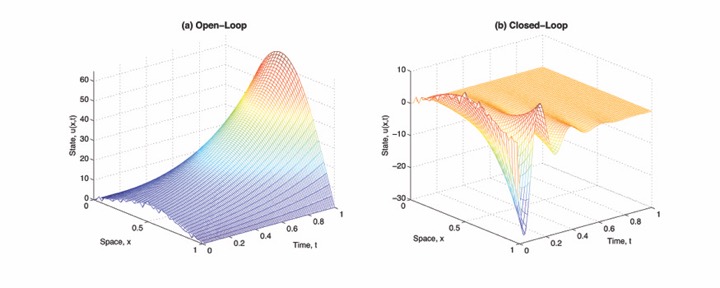
Open-loop and closed-loop responses of a diffusion-reaction PDE

Representative papers

  1. Safe Learning MPC With Limited Model Knowledge and Data — A. Kandel and S. J. Moura, IEEE Transactions on Control Systems Technology, 2024
  2. Reinforcement Learning Versus PDE Backstepping and PI Control for Congested Freeway Traffic — H. Yu et al., IEEE Transactions on Control Systems Technology, 2022
  3. Robust fault detection of a class of uncertain linear parabolic PDEs — S. Dey et al., Automatica, 2019
  4. Adaptive Partial Differential Equation Observer for Battery State-of-Charge/State-of-Health Estimation Via an Electrochemical Model — S. J. Moura et al., Journal of Dynamic Systems, Measurement, and Control, 2013
  5. Optimal Boundary Control of Reaction–Diffusion Partial Differential Equations via Weak Variations — S. J. Moura and H. K. Fathy, Journal of Dynamic Systems, Measurement, and Control, 2013

All 165 papers in this theme

04 · Research theme

Foundations: PDE control, optimization & learning

What new theory is needed when the systems we control are spatially distributed, uncertain, and data-rich?

Our applications share a common mathematical core. Batteries, thermal systems, traffic flow, and load populations are naturally described by partial differential equations, and their operation leads to large-scale, uncertain optimization problems.

We contribute theory and algorithms for PDE boundary control and observer design, robust fault detection for parabolic and hyperbolic PDEs, extremum seeking, dual and Hopfield methods for large-scale mixed-integer programming, and model-based reinforcement learning with safety and distributional-robustness guarantees.

Current directions

  • Boundary control and observers for PDEs
  • Robust fault detection for distributed-parameter systems
  • Extremum seeking and adaptive control
  • Large-scale and mixed-integer optimization
  • Safe and data-efficient learning for control

Collaborators: Prof. Miroslav Krstić, UC San Diego; Prof. Florent Di Meglio, MINES ParisTech; Prof. Alexandre Bayen, UC Berkeley
Support: National Science Foundation

Facilities

Experimental capabilities

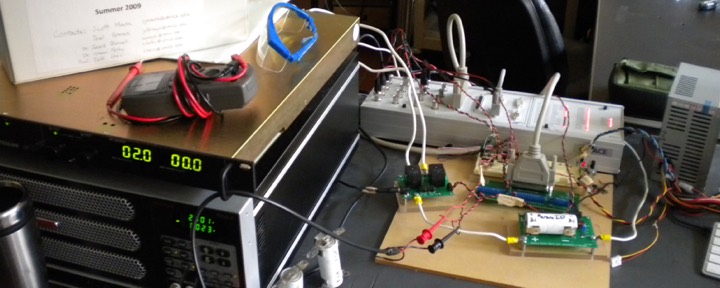
Battery cycling, environmental testing, rapid control prototyping, and building sensor networks support our experimental validation.

PEC SBT2050 battery cell/module test system

12 channels (expandable to 24), 50 A / 20 V per channel, CAN for hardware-in-the-loop, ±0.03% FSD accuracy

ESPEC BTL-433 temperature/humidity chamber

−20 °C to +180 °C, 10–95% RH

dSPACE MicroAutoBox II 1511

Real-time rapid-control prototyping with four CAN channels and analog/digital I/O

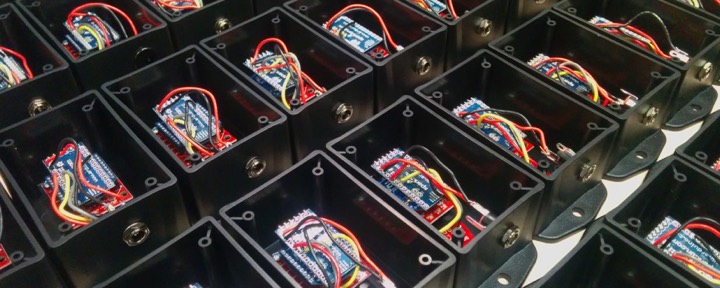
Wireless building sensor network

~70 ZigBee temperature/humidity nodes with a BeagleBone Black gateway